ServicesStorm Damage Repair
Storm Damage Repair in Orange Park
After a storm, the worst thing is guessing. We start with a careful look at your roof, photograph every lifted shingle and bent flashing, and tell you plainly what the storm did. Then we repair it with matched materials and leave your home sealed and tidy.
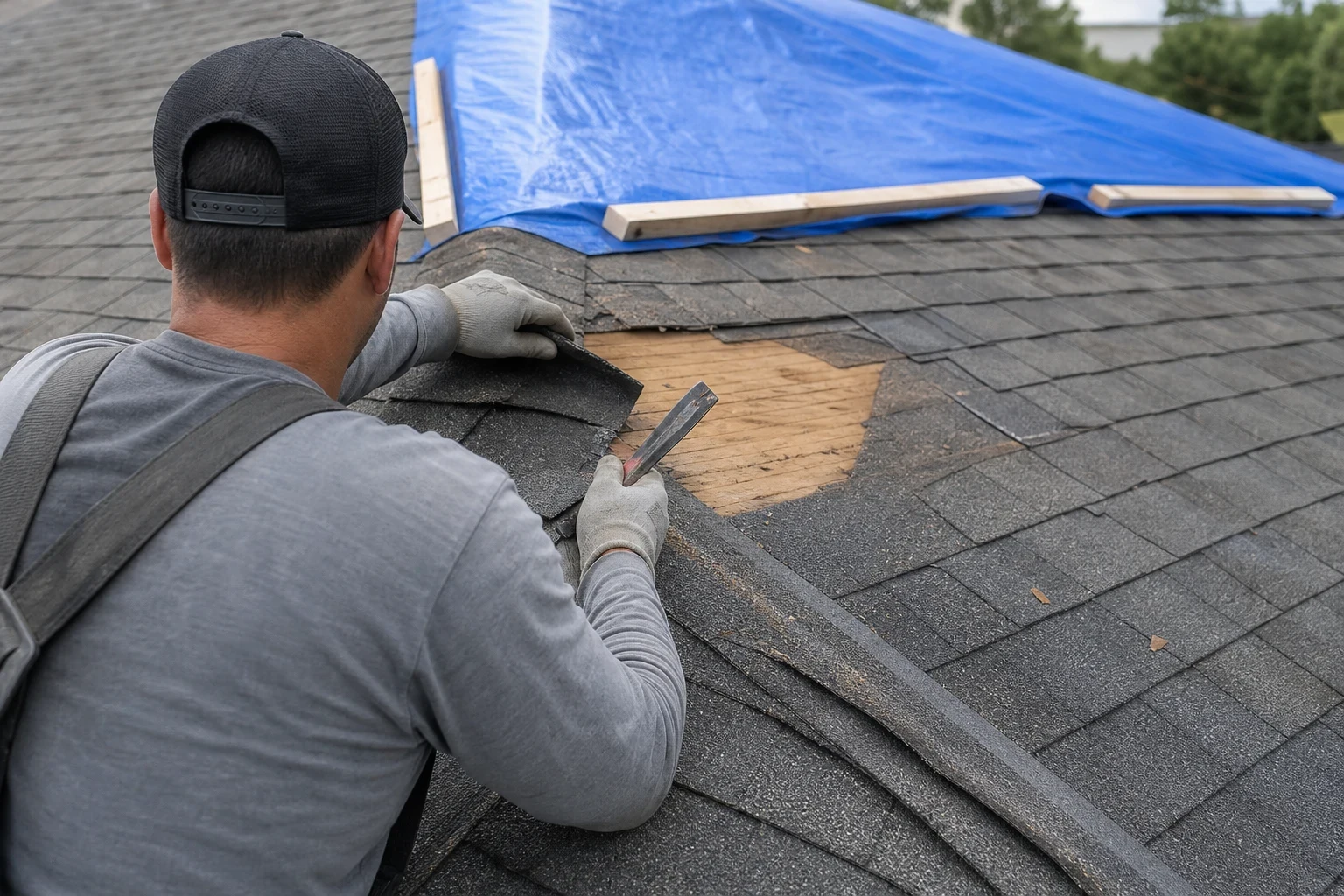
What storm damage repair covers
Wind does most of its harm quietly. A gust gets under a shingle, breaks the adhesive strip and folds the tab back. The shingle settles flat again, but it is no longer sealed, and the next hard rain drives water under it. From the yard, the roof can look fine for months.
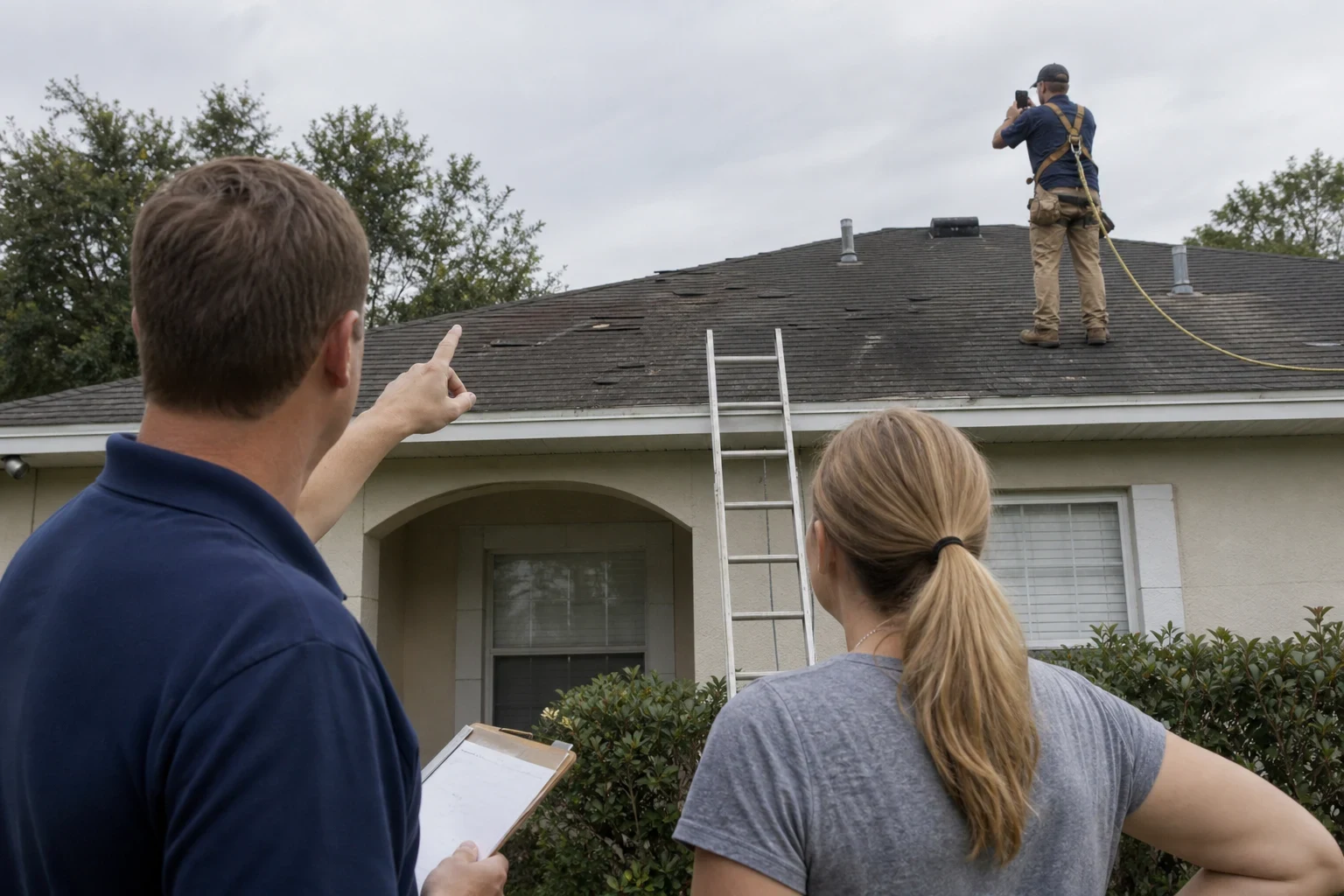
That is why we look closely before we recommend anything. A technician walks the roof, checks the edges, ridge, valleys and every pipe boot, then goes into the attic if we can reach it. You get photos and a written list of what we found, sorted into storm damage and ordinary wear, so your claim and your repair rest on the same facts.
Most storm repairs are just that: repairs. When the damage is too widespread for patching to hold, we say so and explain why, and our roof replacement page covers what that job involves.
What the work includes
- A full post-storm roof check
- Roof surface, flashing, vents, gutters and the attic underside, looked over in that order. This first visit is free.
- Photo documentation
- Dated photos of each damaged area, with close-ups and a wider shot that shows where it sits on the roof. You keep them for your records and your insurer.
- Working with your adjuster
- On storm damage claims, we work directly with your insurance adjuster. When it helps, we walk the roof alongside them and show each spot we photographed. What the policy pays is still their call.
- Temporary protection
- If an opening is letting water in, we cover it securely until the permanent repair is scheduled, so the decking and ceiling below stay dry.
- Matched permanent repairs
- Shingles are matched for profile and color as closely as current products allow. We replace torn underlayment and reseal or replace flashing rather than smearing sealant over it.
- Cleanup and a magnet sweep
- Old shingles, nails and storm debris leave with us. Beds, walkways and the driveway are swept before we go.
What storm damage looks like from the ground and indoors
Roofing pieces on the lawn
A single torn shingle in the grass points to a gap somewhere above it. The shingles next to that gap have usually been loosened as well.
Creased or lifted tabs
A faint horizontal line across a shingle marks where wind bent it back. Its seal is gone, even though it may be lying flat again.
Granules collecting at downspouts
Driving rain and blown debris can strip the protective granules from shingles. A fresh, gritty pile at the bottom of a downspout after bad weather deserves a closer look.
New ceiling stains
A tan ring on the drywall, or a spot that feels soft when pressed, means water has already found its way in. The decking above it is probably damp too.
Bent flashing or dented vents
Metal around chimneys, walls and vents can be pried loose by wind or struck by branches, opening a direct path for water.
A limb on the roof
Even a branch that rolled off can crack shingles or bruise decking. Please leave removal from the roof to a crew rather than climbing up yourself.
What affects the cost of storm repairs
No two storms leave the same damage, so we price from what we actually find on your roof. If insurance is covering the work, the adjuster's scope sets much of the budget. If it is not, financing is available, and the free, no-obligation estimate lets you weigh options first.
How far the damage spreads
Torn tabs confined to one slope take little time and few materials. When wind has worked across several slopes or along the full ridge line, materials and labor grow with it.
What is under the shingles
Wet or cracked decking has to be replaced before new shingles go on. We only know its condition once damaged material comes off, and we show you before adding it.
Matching your existing roof
Some older shingle lines are discontinued. Finding the closest match, or deciding how much to replace so the slope looks right, can change the scope.
Pitch, height and access
A steep slope or a second story means more fall protection and slower going. Narrow side yards and dense tree canopy also make it harder to move material on and off the roof.
Flashing, vents and gutters
Replacing bent flashing or damaged vents adds parts. If gutters were torn loose, that work is priced separately and described on our gutters page.
From your call to the final sweep
- 1
A booked technician visit
Let us know what you spotted and roughly when the weather passed. We set a time for a technician to come out and keep you posted on it.
- 2
Findings, in plain words
We look closely, photograph and then sit down with you to go through each item. You hear what is storm damage, what is age, and what can wait.
- 3
Claim support and a written estimate
If you file, we share our photos and meet your adjuster when helpful. Either way you get a written, line-item estimate before any repair begins.
- 4
Repair day
We protect landscaping and entry points, remove damaged materials, check the decking underneath and install the new work. Most repairs finish in a day once materials are on hand.
- 5
Walk-through and cleanup
We show you the finished repair, with after photos, and sweep the property for nails before leaving.
Storm damage questions
Should I call my insurance company first or have the roof inspected first?
Many homeowners find it easier to have the roof looked at first. Our photos and findings tell you whether there is storm damage worth filing for. If there is, you start the claim knowing what is on your roof instead of guessing.
Will you deal with my adjuster for me?
We work with your adjuster directly, and we can be at your home when they visit to walk through our photos and notes. We do not act as the adjuster or negotiate your policy. Coverage decisions stay between you and your insurer.
Is a handful of missing shingles worth a repair visit?
Usually, yes. Missing shingles leave underlayment exposed to sun and rain, and the shingles around the gap are often loosened too. A small repair now tends to prevent wet decking later.
Can you match the shingles already on my roof?
We match brand, profile and color as closely as current products allow. On older roofs the new shingles may look slightly brighter at first and blend in with weathering. If a close match is not possible, we explain the options before any work starts.
What if the storm damage is too much to repair?
Then we tell you so, with the photos that show why. Widespread broken seals or soaked decking can make repairs a short-term fix. We would rather explain that plainly than patch a roof that will leak again.
We had a storm last week. Is it too late to have someone look at the roof?
Not at all, though sooner is better, and more so during hurricane season when another system may be on the way. Lifted tabs and broken seals rarely show from the ground, and photos taken close to the storm date make a claim easier to support. If water is already getting in, tell us on the call so we can plan temporary cover.
Know what the storm did before you decide anything
A free post-storm inspection gives you photos, plain findings and a written estimate. From there, the choice about repairs and claims is yours.