ServicesMetal Roofing
Metal Roofing in Orange Park, Specified From What We Find
A metal roof can outlast several shingle roofs, but only when the deck, flashing and fastening suit your home. We look first, show you what we found, then recommend the panel, gauge and finish that fit the house you actually have.
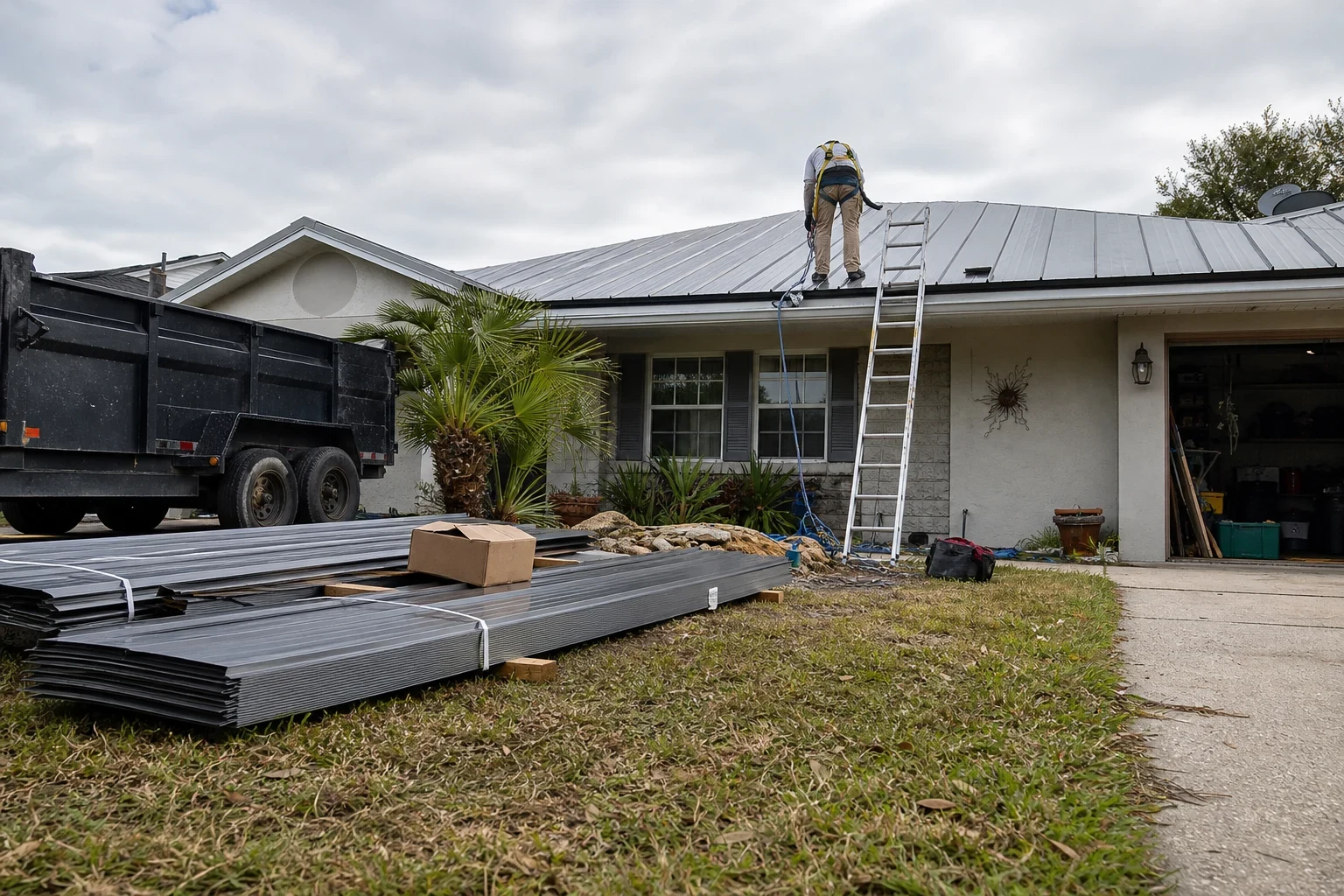
When Metal Is the Right Roof for Your Home
Metal roofing makes the most sense for homeowners who plan to stay put and are tired of replacing shingles every couple of decades. Panels shed heavy rain quickly, resist wind uplift when they are fastened correctly, and a light-colored finish reflects a good share of summer sun before it reaches the attic.
It is not the answer for every roof. Very low slopes, a deck with soft spots or a framing layout full of small valleys can change the recommendation. That is why we start on the roof and in the attic, then tell you plainly whether metal suits your home or whether a shingle roof replacement is the better value.
When metal is the right call, we walk you through the two main systems: standing seam, with hidden fasteners and clips that let panels expand in the heat, and exposed-fastener 5V or ribbed panels, which cost less up front and need their screws checked over time.
What Our Metal Roofing Work Includes
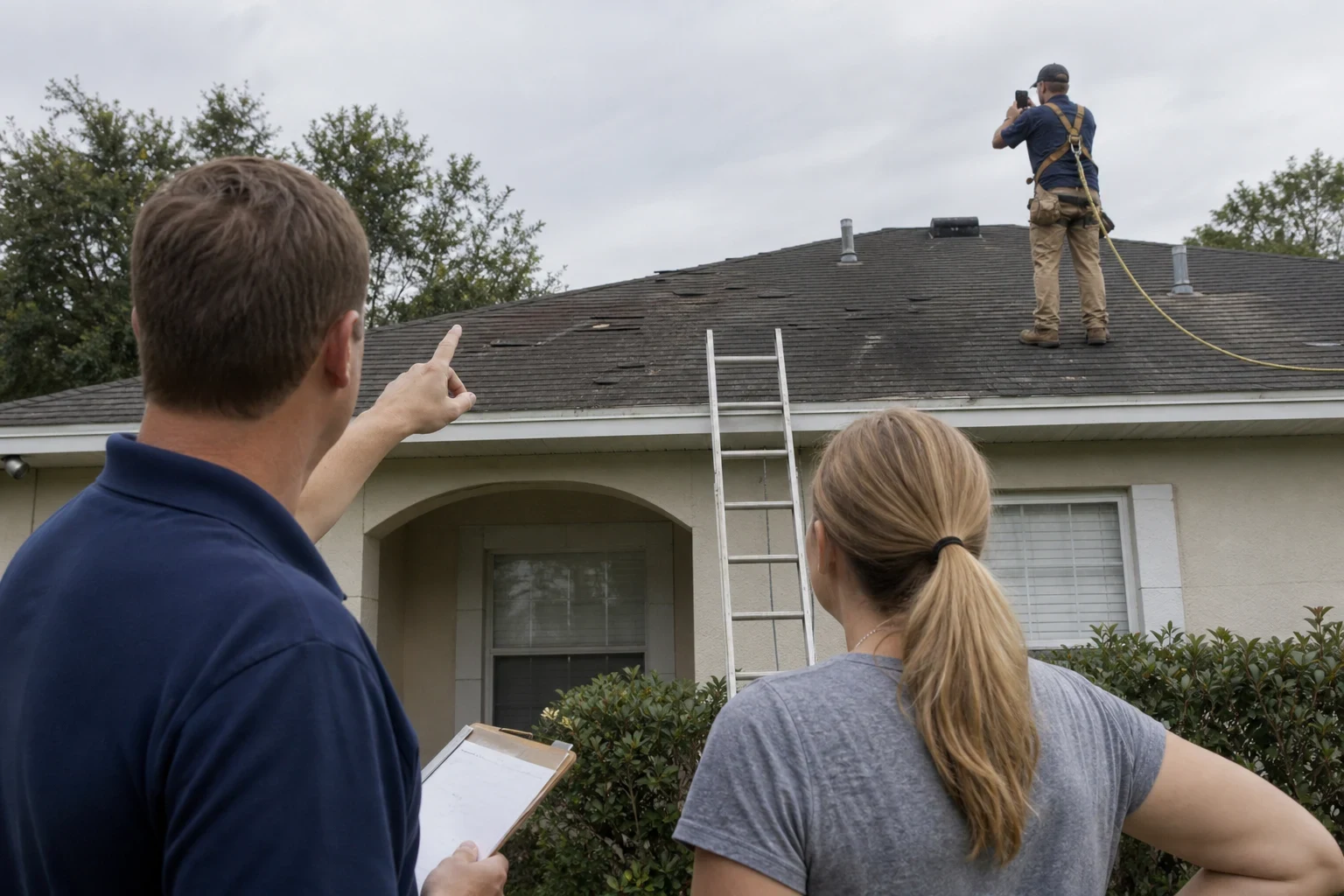
A full inspection before any quote
We check the decking, rafters, existing flashing and attic ventilation. You get photos and a plain account of what is sound and what is not.
Tear-off down to the deck
We usually remove the old roof so we can see the sheathing. Rotted or delaminated boards are replaced before anything new goes on.
High-temperature underlayment
Metal runs hot under Florida sun, so we use a synthetic underlayment rated for that heat. It also acts as a second layer of protection under the panels.
Panels, trim and flashing made to fit
Ridge caps, eave trim, valleys and wall flashing are matched to the panel profile. Pipe boots and penetrations are sealed with parts made for metal, not leftovers from a shingle job.
Fastening to current code
Clip and screw spacing follows the wind requirements for your home. We pull the permit and line up the required sign-offs.
Cleanup with a magnet sweep
Metal jobs leave screw and trim offcuts. We sweep the yard, driveway and beds before we leave each day.
Signs Your Home Is Ready for a Metal Roof
- Shingles lifting after every storm
- If summer thunderstorms keep loosening tabs and you keep calling for patches, a fastened metal system may stop the cycle.
- Your shingle roof is near the end
- Granules in the gutters, curling edges and brittle tabs mean a replacement is coming. That is the best moment to weigh metal against another round of shingles.
- Rust or loose screws on an existing metal roof
- Older exposed-fastener roofs often fail at the rubber washers, not the panels. Sometimes new screws are enough; sometimes the panels have rusted through at the laps.
- An attic that stays hot
- A reflective finish paired with proper ventilation can take some heat load off the attic. We check your vents before promising anything.
- You plan to stay for the long run
- Metal costs more at the start. It pays back best for homeowners who will be there to enjoy the years it lasts.
How a Metal Roof Job Runs
- 1
Technician visit and findings
We go over the roof and attic, take photos and measure. Then we sit down with you and explain what we saw before recommending a system.
- 2
Written estimate and choices
You get a line-item estimate covering panel type, gauge, color and finish, and any deck repairs we expect. Paying over time is an option, and we can go over financing when we review the numbers together.
- 3
Material order and paperwork
Panels are ordered cut to your roof's measurements while we handle the permit filing. Once everything is on hand, we confirm the start date with you.
- 4
Tear-off and dry-in
Old roofing comes off in sections, and each opened section is covered with underlayment before the crew moves on. That way a passing afternoon storm never reaches bare wood.
- 5
Panels, trim and final walk
Panels and trim go on, the permit is closed out, and we walk the roof with you. We point out what to watch for in the years ahead.
What Sets Your Metal Roof Price
We build the number from what we find on your roof, not from a per-square guess. The system you pick carries the most weight, followed by the condition of the deck. Each part is itemized so you can see where the money goes.
- Standing seam or exposed fastener
- Standing seam takes more material and labor but has no exposed screws. 5V and ribbed panels cost less and install faster.
- Gauge and finish
- Thicker 24-gauge steel and premium painted finishes cost more than 26-gauge or bare Galvalume. They also hold color and resist denting better.
- Roof shape
- Valleys, hips, dormers and skylights each need custom-cut trim and flashing. A simple gable roof costs far less than a cut-up one of the same size.
- Deck condition
- Soft or water-stained sheathing has to be replaced before panels go on. We show you photos of any board we plan to change.
Metal Roofing Questions We Hear Often
- Is a metal roof loud when it rains?
- Installed over a solid deck with underlayment, it sounds close to a shingle roof from inside. The loud metal roofs people remember are usually panels over open framing on barns and sheds.
- Can you put metal over my existing shingles?
- In some cases code allows it, but we usually recommend a tear-off. Going over shingles hides the deck, and soft boards underneath can loosen fasteners over time. We explain the tradeoff once we have seen your deck.
- Will a metal roof make my home more likely to be hit by lightning?
- It won't. Where lightning lands depends on height and surroundings, not on what covers the roof. And because steel panels are noncombustible, they will not ignite if a strike ever happens.
- How does metal hold up in hurricane season?
- Properly fastened panels resist wind uplift well, and there are no tabs to peel back. Most failures we see come from loose trim or poor flashing, which is why we spend so much time on edges and ridges.
- My metal roof was damaged in a storm. Can you help with the claim?
- Yes. Post-storm inspections are free, and we photograph each dent, lifted seam and loose trim piece we find. We can deal with your adjuster ourselves, so you are not passing details back and forth. The Storm Damage Repair page lays out each step of a claim.
- How long does installation take?
- Most homes take several working days, depending on size, roof shape and weather. We give you a realistic schedule once materials are ordered.
See Whether Metal Makes Sense for Your Roof
We will check the deck and framing, show you the photos and give you a straight recommendation. The estimate is free and carries no obligation.