ServicesRoof Inspections
Roof Inspections in Orange Park, Findings First
We look closely at the roof covering, flashing, vents and decking, then walk you through what we found with photos. Only after that do we talk about whether anything needs doing. Often the honest answer is a small fix, or nothing yet.
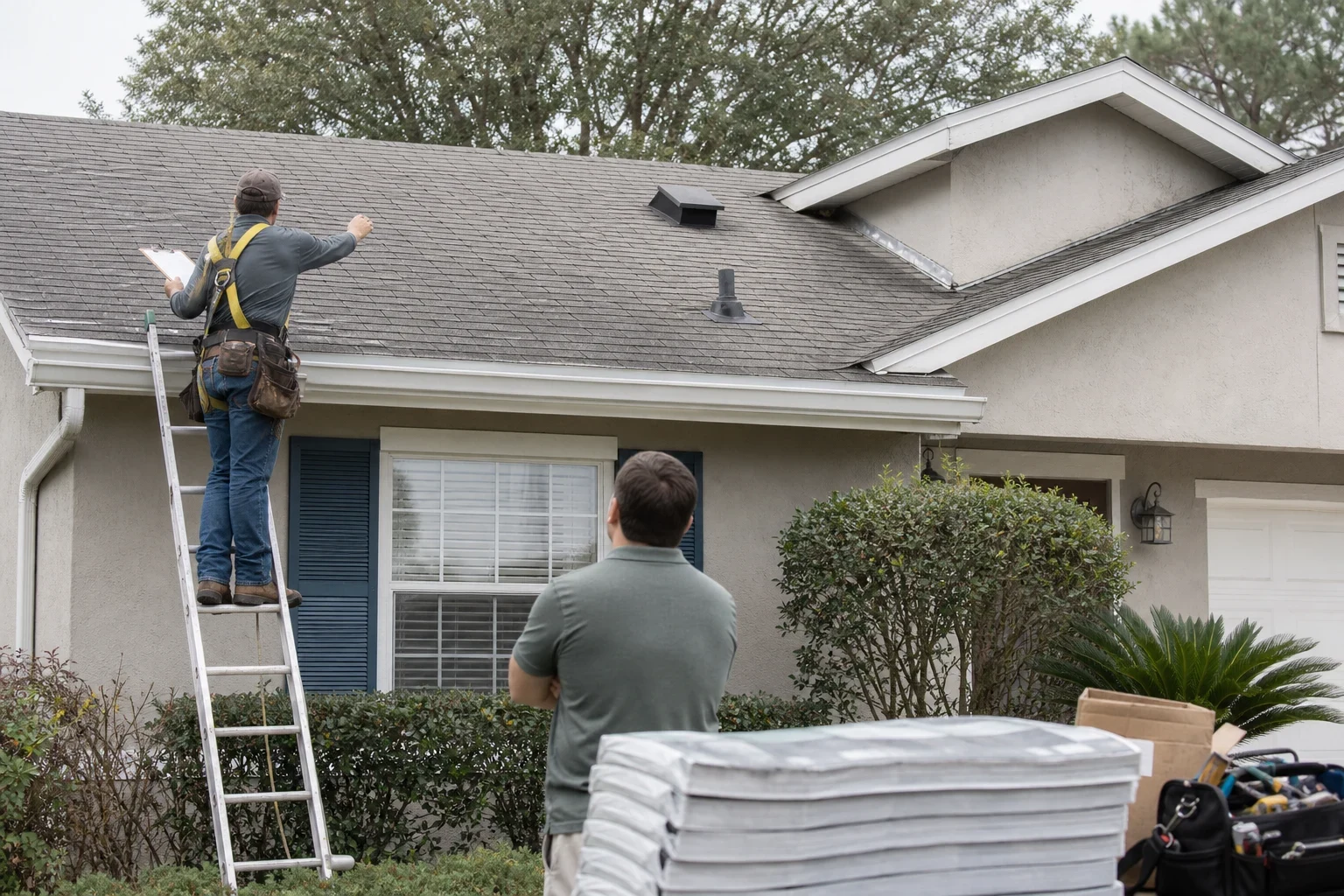
What a roof inspection is for
This visit is an unhurried look at the whole system over your home: the shingles or metal panels, the flashing at walls and chimneys, the pipe boots and vents, the edges and gutters, and, from inside the attic, the underside of the decking. The aim is a clear picture of condition, not an opening for a sales pitch.
We give you the findings first, in plain words and photos, and keep them separate from any recommendation. What you do with them is your call. Some homeowners use our notes to plan a roof replacement a few years out. Others learn that one cracked pipe boot is the whole problem and a modest roof repair will settle it.
It makes sense to book one when a roof is getting on in years, before you buy or sell a house, when an insurer asks about roof condition, or after a strong summer thunderstorm or tropical system has passed through Clay County.
What we check on every visit
- Shingles and metal panels
- On shingle roofs we look for granule loss, curling, cracked tabs and seal strips that have let go. On metal we check for fasteners backing out, dried sealant at screw heads and loose trim.
- Flashing, pipes and vents
- Water rarely gets in through the open field of shingles. It finds the seams around pipes, vents, walls and chimneys, so we check step and counterflashing, skylight curbs, vent stacks and the rubber pipe boots that crack after years in strong sun.
- Attic and decking
- From inside, we look for water staining, daylight around nails, soft or delaminated plywood and signs of trapped humidity like mildew on the sheathing. Ventilation gets a look too, since a hot, damp attic shortens a roof's life.
- Edges, drip edge and gutters
- We note overflow marks, rotted fascia behind the gutters and downspouts that empty against the foundation. If the gutters need attention, our Gutters page covers that work.
- Photos and written findings
- You get labeled photos showing where each issue sits, what we think caused it and how urgent it is. Items are sorted into needs attention now, worth watching and in good shape.
Signs it's time to have your roof looked at
A stain on the ceiling
Even a faint ring means water got past the roof at some point. The entry point is often several feet uphill from the stain.
Granules collecting in gutters
Fresh shingles shed a little loose grit in their first months, and that is expected. When an older roof keeps leaving sandy buildup in the gutters, the shingles are wearing through their protective layer.
Lifted or missing shingles after wind
A shingle that has broken its seal can look fine from the yard and still let wind-driven rain underneath.
A stale, musty attic
If the attic smells stale or the insulation feels wet to the touch, moisture is either coming in from above or hanging around for lack of airflow. Either one costs less to deal with early.
A roof with no known history
If you bought your home without records of the roof's age or past repairs, a careful look gives you a baseline to plan from.
How the visit runs
- 1
A short call to set it up
When you phone, we ask what prompted the visit, roughly how old the roof is and whether you've seen any leaks. That tells our technician where to look hardest.
- 2
Ground and roof surface
We walk the outside first, checking gutters and slopes, then go up when it is safe. If a roof is too steep or wet to walk, we work from the ladder and eaves and tell you plainly what we could and could not see.
- 3
Up through the hatch
If you're comfortable with it, the technician climbs into the attic to see the sheathing from below, along with the insulation and vents. We keep our weight on the framing and leave everything where it was.
- 4
Findings, then options
We review the photos with you, issue by issue, and answer questions as they come up. If work is needed, we explain the choices and give you a free, no-obligation estimate. If nothing is needed, we say so.
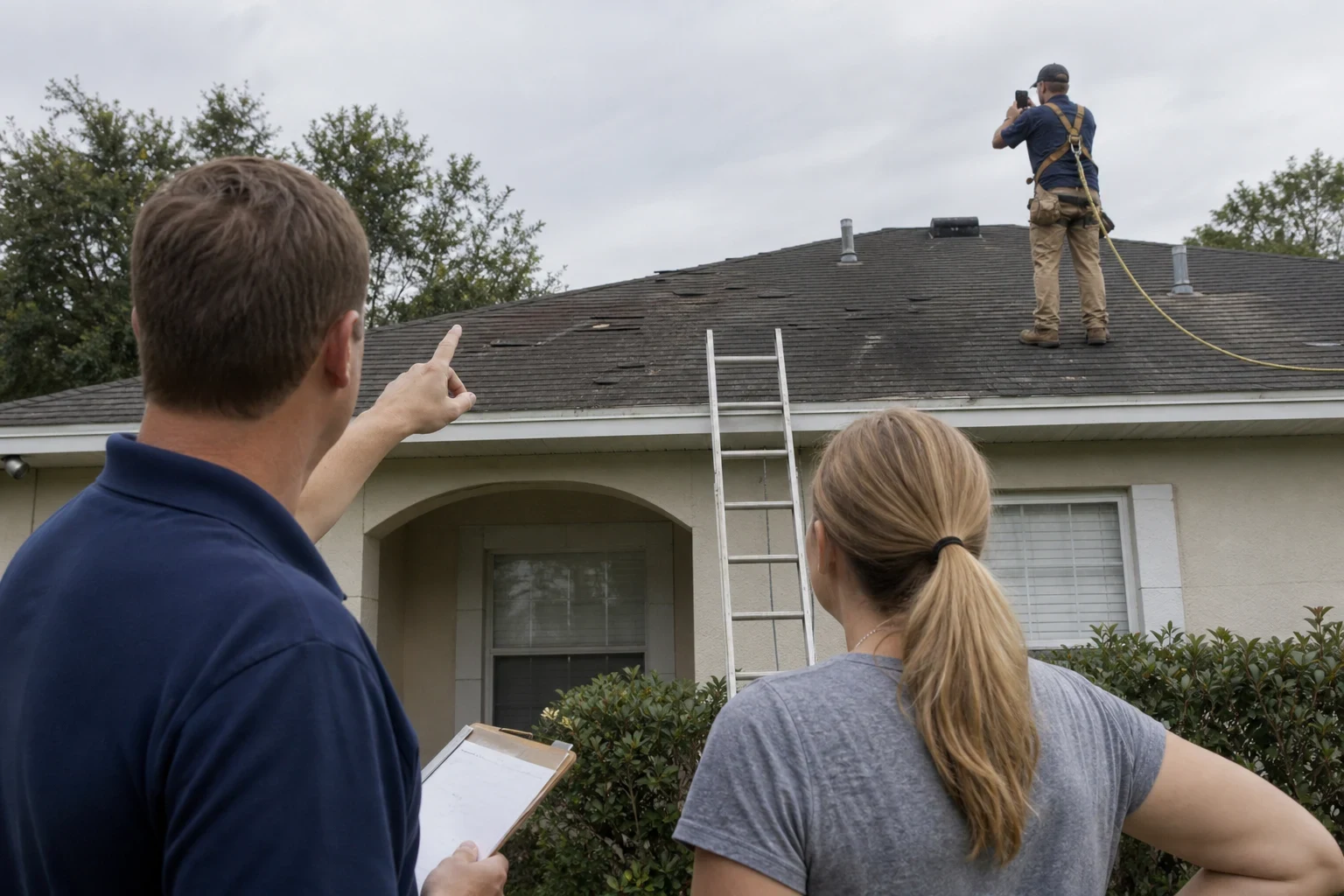
What shapes the cost of the work we find
The technician visit is free, and so is the estimate that follows if we find work worth doing. The price of any repair or replacement depends on what is actually on your roof, which is exactly why we look before we quote. Financing is available for larger projects.
- Roof size and pitch
- A bigger roof takes more material and more hours. A steep pitch calls for harnesses and roof jacks, and every task on it goes slower.
- Material on the roof
- Architectural shingles, three-tab shingles and metal panels each call for different parts and methods, and that shows up in the estimate.
- What is under the covering
- Rotted decking or failed underlayment only becomes visible once we look closely or open an area. We price it from what we see, not guesses.
- Access and permits
- Tight lots, tall eaves and landscaping close to the house can add time. Larger jobs need a permit, and we include it in the estimate when it applies.
Roof inspection questions
Something not covered here? (904) 849-2320
How long does the visit take?
On a typical single-story or two-story home, an hour or two covers the roof, the gutters and the attic. Tight attic access or a complicated roofline can stretch that. We'd rather take the time than miss something.
Do I need to be home?
It helps. We need access to the attic, and the findings make the most sense when you can see the photos and ask questions on the spot. If that isn't possible, we can talk them through by phone later.
Is this visit just a pitch for a new roof?
It isn't. We describe what we found before we recommend anything, and plenty of visits end with a small repair or a note to have another look in a year or two. When replacement is the right answer, the photos show you why.
Can you check my roof after a storm for an insurance claim?
Yes. Post-storm inspections are free, and we photograph any wind or hail damage so it is on record. Should you decide to open a claim, we deal with the adjuster ourselves and go over our documentation with them. Our Storm Damage Repair page explains the steps that follow.
Can you check a metal roof?
We can. Metal ages differently from shingles, so we focus on fasteners, seams, sealant and trim. Our Metal Roofing page covers repairs and new installations.
Find out where your roof really stands
One visit, a clear set of photos and an honest read on what your roof needs, if anything. We work across Orange Park, Fleming Island, Middleburg and the surrounding area.